
Common Mistakes in Contract Writing
In the world of business, even well-intentioned contracts can turn into liabilities if they’re not drafted correctly. Poor contract writing doesn’t just lead to confusion, it can open the door to lawsuits, lost revenue, and failed deals. Here’s a breakdown of the most common errors and how to avoid them.
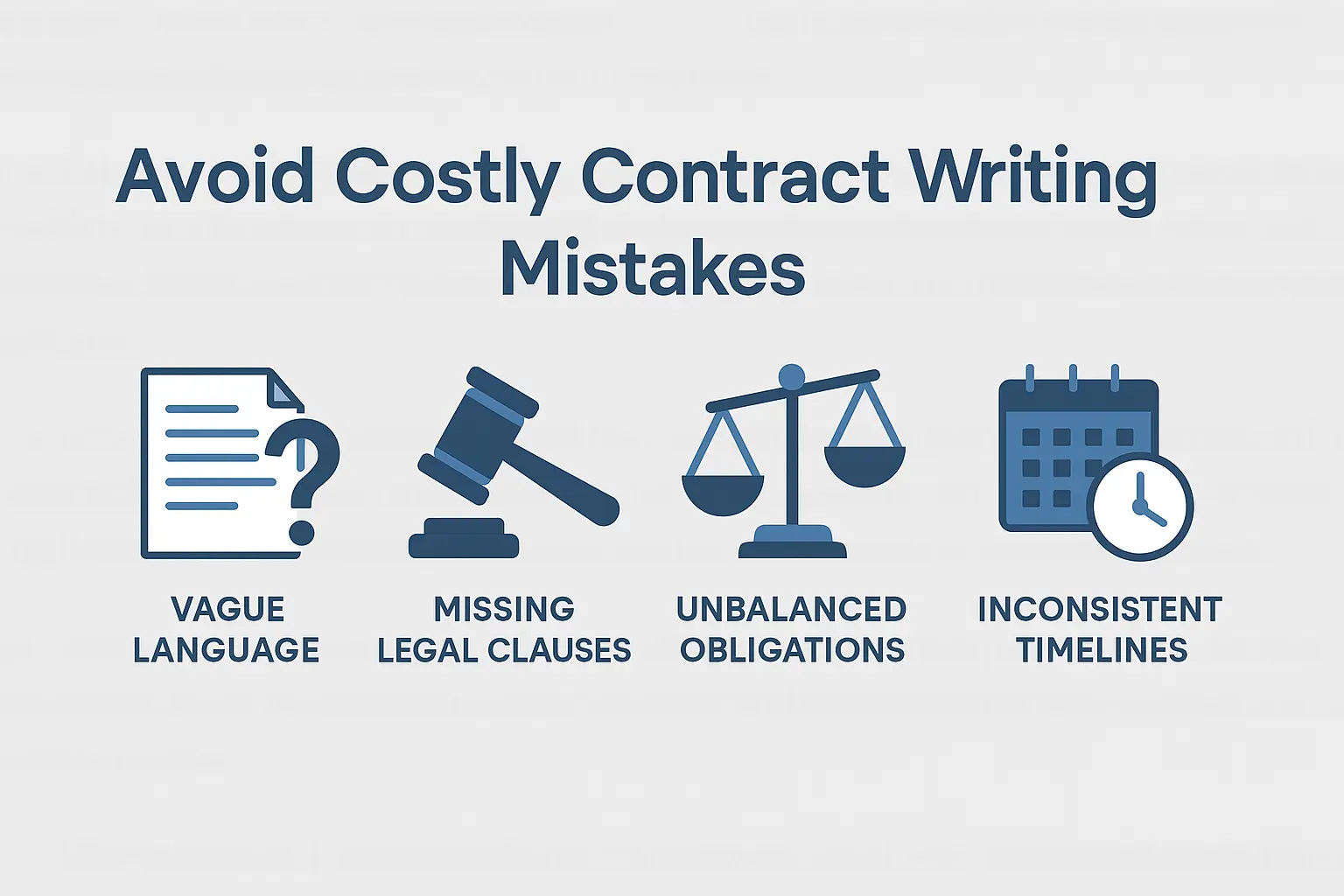
Vague Language and Ambiguous Terms
One of the biggest pitfalls in contract writing is using broad or unclear language. Words like “reasonable,” “soon,” or “as needed” can mean different things to different people. This ambiguity often leads to disputes when one party interprets a term differently from the other.
Tip: Be as specific as possible. Define all timelines, quantities, and expectations clearly to ensure both parties are on the same page.
Missing Governing Law and Jurisdiction Clauses
Contracts that don’t specify the governing law or jurisdiction can create chaos if a dispute arises. Without this, you could end up fighting a lawsuit in a foreign court under unfamiliar laws.
Tip: Always include a clause identifying the country or state law that governs the agreement and the jurisdiction where disputes will be settled.
No Defined Remedies for Breach
Many contracts fail to outline what happens if one party breaches the agreement. Without clearly defined consequences, you may have little recourse if the deal falls apart.
Tip: Include remedies such as penalties, interest for late payments, or termination clauses to safeguard your interests.
One-Sided or Unbalanced Obligations
Contracts that unfairly favor one party can be challenged in court or result in a breakdown of trust. Unclear payment schedules, unequal liability, or one-sided termination clauses are all red flags.
Tip: Strive for balance. A fair contract is not only enforceable—it also promotes lasting business relationships.
Incomplete Signature Protocols and Missing Annexes
Contracts often refer to annexes or attachments, but forget to include them. Others are signed without date stamps, witness statements, or identification protocols, which weakens their enforceability.
Tip: Ensure all referenced documents are attached and the contract includes complete execution details for each party.
Inconsistent or Conflicting Timelines
Timelines that are unrealistic or contradict other parts of the contract can trigger disputes. For example, a project deadline might not align with the delivery schedule or payment terms.
Tip: Double-check all deadlines and sequences to make sure they align logically and practically.
How to Avoid These Contract Writing Mistakes
-
Use a lawyer: Legal professionals can draft and review your contracts to ensure they’re enforceable and risk-proof.
-
Standardize your templates: Work from vetted documents to avoid reinventing the wheel and causing errors
-
Always review: A second pair of eyes can catch ambiguities, errors, or omissions you might miss.
Final Thoughts
Strong contract writing is the backbone of any successful business relationship. By steering clear of these common mistakes, you reduce risk and increase clarity in your deals. At Attori Law, we specialize in drafting, reviewing, and notarizing business contracts that stand up under pressure.
Need help with a contract?
Let our legal experts future-proof your agreements. Contact us today for a consultation.